There is a version of this letter where I open with a metaphor. Something about fruit. Symbolic. It would be a reference to the new year and how hard it already is. A sliver of grace to ease us into this message before I must say the unsayable. I tried very hard to write that version, but the fact that I did not succeed indicates even more that the unsayable—the un-metaphorize-able—must be said: ICE continues to kill, including Renee Nicole Good. The ceasefire in Gaza is being violated. The United States continues its rampage.
At this time, I grasp at writing with a mix of doubt and hope. The bullet seems indifferent to language, although I have seen—we have seen—how words can unearth truth from horrifying propaganda. Words as awakening; words as witness. In memorializing Good, Danez Smith says, “Hard to fool a poet; we see through everything.” Hard to fool a writer of any kind. Harder still to stop us, especially when we have keen eyes and unrelenting tenacity.
Reader, how can a newly-peeled year already be so hardened? I want freshness and tenderness for us all—crusts of citrus peel underneath our fingernails—bursts of juice in our mouths like small and sudden floods. I find it hard to promise you these things, alone, so I will do the next best thing I can: I offer you nourishment through the abundance of writing and art in Issue 91. Cut up and enjoy slices from Stacy-Ann Ellis’s short story, “A Birth,” and let it leave a bittersweet tang. Take a bite from these lines by Jay Julio: “If you are recording this please / don’t be scared. It was always going to be the bullet / or the bullet or the bullet.” I invite you to pluck “A Song and A Hope” from a branch and sing a tune while you’re at it. “Sometimes, a song just needs to get you through to the next minute,” writes author Joseph Spring—keep that flavor in your mouth.
Chew and chew this fruit, reader. When the unsayable has to be said, wet your lips with juice and swallow down this nourishment. Please partake in Issue 91 of Bellingham Review.
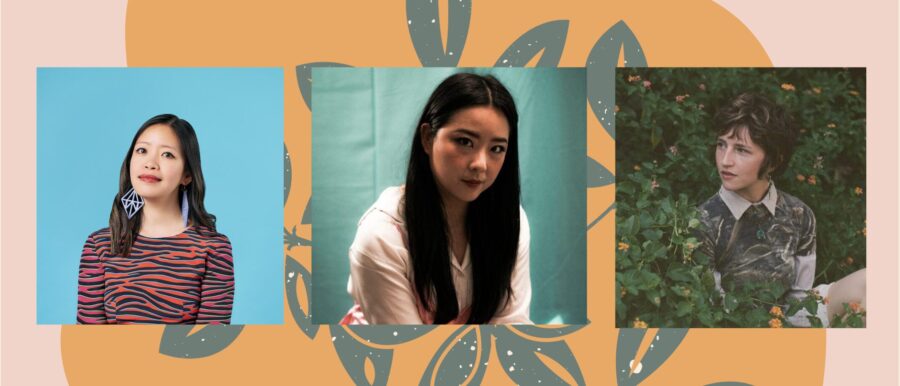
Sincerely, Sam X Wong, Managing Editor
You’ve heard of a letter from the Managing Editor, now get ready for: letter from the Assistant-Managing-Editor. If you’re curious what an "Assistant Managing Editor" means or does, don’t worry about it.

I’ll be the first to admit– when we took the journal entirely online I did have a quiet little antiquated heartbreak. Reading on my broken 2015 Macbook can’t rival the charm of reading a book, a journal, a paper thing with pages turning, licking the tip of the finger, if you’re one of those types (I am not, but I respect the game.) Reading, obviously reading, in the corner of the cafe. A beacon of intrigue and romanticization.

This work has forced me to really take my time with each of these pieces as I copy and paste and edit and paste and format them on the backend of our website– and I’ve been disproven, and sewed back my haughty heart, like darning a sock. None of the depth, heart and imagination is chipped from any of this work. I’ll admit there’s a piece of me skeptical that readers will actually take their time with a collection that’s entirely online rather than a physical thing one can hold— I know, reader, that you can not have a physical relationship with these pieces. And if you, like me, associate most with the love language of physical touch, this might be a challenge, a long-distance intimacy with the works, if you will. I invite you to remember all that wild longing that is characteristic of any kind of long-distance union— & to remember how the rapture of relationship is no less present in distance. And that in many such cases, the distance highlights the contours of intimacy, heightens its contrasts in the dark of absence.

I’ve waxed poetic about webpages enough. Slow down with it all if you can, if you have the privilege. Through these writers I have learned so much: the sly, quick-disappearing edge of slick prose that’s always slipping past your vision and recognition, dousing you with sensuality or philosophy, or prose so nakedly apparent that it seems to skin a thin sheen off of life that you didn’t know was there, and suddenly you’re looking barely at a situation in its simple, ample truth. Flash fiction the likes of Christopher Passante’s "Flood" are brave to imagine a changed, bulging world through the heavy brevity of a mind tinkering its sorry, determined way through loss. Annie Bartos’s "Dissection of a Darling" dares to reenvision motherhood through its specters of possession, consumption, parasitism. The writers here are brave and I’m learning a lot from them.

It’s a privilege to pass this work along to you— to all others who are doing this work, bringing new literature into the light, to any capacity at all, I applaud you, I see you. Let us continue trying to offer each other the gift of legibility, wherever we stand in the crowd, whatever seats we got.

Those in the nosebleeds, faithfully continuing to pass your notes up to the front: thank you.

With painful sincerity,
Cassidy Spencer, Assistant Managing Editor
I’m teaching an Ethnic Studies capstone course right now and on the first day, I shared this quote by Maya Angelou with my students: “When I’m writing, I am trying to find out who I am, who we are, what we’re capable of, how we feel, how to lose and stand up, and go on from darkness into darkness.” And, in our discussion, so much came up in that last part of her quote: “and go on from darkness into darkness.” Both/and always— the continual darkness and heartbreak, but also the continual “go[ing] on,” somehow. This is how I am feeling right now, writing this letter at the start of the new year. And how writing — and reading — offers a kind of intimate glimpse into how we might “go on.” “We” being a key word here too. In community, with our beloveds.
The world right now feels like continual heartbreak, from the ongoing genocide in Gaza, the killing of protesters in Iran, and ICE’s murderous raids and attacks. There is so much darkness, yet there is that “we.” Taylor Maroney’s painting of Theo speaks to that “we,” that necessary togetherness. Of their practice, Maroney writes: “I paint my peers in the way they deserve, a way they are not often portrayed. As such, these paintings become a wish, a safe space for myself and other trans folks to exist. I release these images into the world as an act of reclamation.”
There is so much in this issue that speaks to radical love and entangled grief. From Taylar Christianson’s “DEAR LONG HAIRED WRINKLED BUTCH WOMAN WITH A COCK WHO I AM GOING TO BE” to Lana Reeves’s “How to Love a Sinking Island” to Rema Ghassan Shbaita’s “My aunt’s ring.” In each poem, essay, story, and hybrid piece, these writers unravel the emotional layers of what it means to “go on.” It’s been a true honor to hold these pieces, tenderly, with my dedicated editors and staff. I encourage you to slow down with these marvels of literature, as they sing, demand, kiss, protest, reclaim, go on.
With warmth and as much ease together as possible,