A Song and a Hope
The miserable task is called cold trailing. Our entire fire crew is lined out on our hands and knees crawling across the burned out remains of the forest checking for signs and symptoms of heat. It’s near the end of our 14-day roll and we’re exhausted. We’ve been digging line, lighting backfires, and cutting brush up and down steep slopes, huffing smoke and counting the days until it’s over. The fire has finally started to tame. We sweep the char with our gloves pulled down touching the ground with the back of our wrists so we don’t burn ourselves. We’re looking for hotspots. Sometimes we actually find one and dig and drench the culprit till it’s no more. Most of the time, we just suffer. Somewhere, Sisyphus looks at us from his hill and commiserates.
Near afternoon when the sun starts to sit on top of us, the crew starts to break. Darryl, “D-Train”—a mountain of a man from the heart of the city—starts to cry in small words. He slows down and the whole line slows down. He’s hungry and we try and get him to eat and drink but he’s gone toddler-brained and can’t figure out what he needs. He stands up and won’t go back down. Some of the crew starts to yell at him. The sun and terrible labor have a way of sucking the compassion right out of you. I’m relieved that he broke before I did. His breakdown a reason to stop crawling. Darryl is just our pet canary in the coal mine now.
Darryl’s tears catch the dust we’re kicking up and stop abruptly on his cheeks. Our squad boss yells down from the edge of the line. We’re not done. He’s angry, too. Life isn’t all rainbows and unicorns, he says. Keep moving. Darryl’s found a different silence and blubbers his way back down to his knees. A harsh quiet sits over the line now. A crew which doesn’t complain much more dangerous than a crew that does.
Little Keith’s voice—also from the heart of the city—breaks sweet and clear through the hot air. He’s started a song which demands a call and response, a brave act amongst so many dusty-mouthed and disheartened people. A voice joins him, and then a few more. Soon almost the whole crew is singing. A few holdouts reserve their voices, work and play never meant to hold hands with one another. The few hours left are still hard but somehow carried easy by Little Keith’s voice. A chorus of dirtbags crawling and caterwauling through the singed carcass of the forest. Little Keith never stopping his song until the work is done. Sometimes, a song just needs to get you through to the next minute. Sisyphus could have used a Little Keith to finally get his boulder to the top.
It’s 2020 and Covid has swept through the nursing facility where I work. People are scared. People have started dying. No one is allowed in besides essential staff. Families wait outside the few rooms that have windows to wave to their loved ones and write messages of support. We hold up an iPad so loved ones can sing “Happy Birthday” to their beloved Ne-Ne. She flutters her eyes a little and looks like she’s mouthing the words, too. She’s 88 today. She won’t see 89. We’ve run out of protective equipment and wear garbage bags. I remember Oscar the Grouch’s song “I Love Trash” and I laugh. Sometimes a song can keep you sane enough to stay alive and help others do the same.
My new patient has had a stroke. He’s young and in his 40’s with little kids like me and a beautiful wife who is trying to understand what dreams might have to go by the wayside now. He’s dysarthric and can’t use the muscles in his mouth in the right way and he can only let out what sounds like small, sweet howls. His wife puts on his favorite, Chris Stapleton’s “Tennessee Whiskey” and he belts out the lyrics as best he can as he dances with her next to the hospital bed she sometimes crawls into with him. He sounds like a hound dog baying after a possum but it’s one of the best performances I’ve ever heard. The nurse and I laugh with wet eyes. Sometimes you don’t have to be in tune to get the song right.
My skipper is a tyrant; I’m going to have to spend seven weeks, cold and wet, stuck on 32 feet of boat floating in Bristol Bay with him covered in salmon guts. I read Kurt Vonnegut’s Dead-Eyed Dick a dozen times—the main character always sings when life is impossible—and then I figure I might as well sing, too. I dredge the fish holds and wash the bloody brailer bags while I belt out The Rolling Stones’ “She’s a Rainbow.” The nets slap through the drum and off the stern roller spooling into the sea to my rendition of The Little Mermaid’s “Les Poissons.” I swear the song brings a better catch. There are beluga whales off the bow and I sing them along their way. I wish them a good catch, too. I sing myself into short three-hour slumbers between fishing sets and remember Dad’s love for the Clancy Brothers’ Sing of the Sea. I can remember almost every song of that album to the word. I’m a little closer to home when I sing these even when I can’t see land. Thank you, Dad. I see myself off the small runway in Naknek, Alaska looking down at the tundra below, whistling Steam’s “Na Na Na, Na Na Na Na, Hey Hey Hey, Goodbye.” Goodbye, Skipper. Goodbye.
Dad and I sing Waylon Jennings’ “Luckenbach, Texas” at my wedding and he dresses up in fake braids like Willy Nelson. A duet for the ages. We sound terrible, bellowing loud and proud into the rented hall, but that’s not the point. The wedding party loves it even if they have to cover their ears. Sometimes, the best love comes in a song.
Dad has dementia now. He’ll ask me twelve times and twelve more if he’s had breakfast, where his socks are or if the 49ers are playing today, but he can still remember the important things. That the girls who sit on his lap are my daughters. That I am his son. And, without hesitation, every lyric to every song and poem he’s ever listened to worth remembering. He recites the “Rhyme of the Ancient Mariner” when we ask him to and bounces my girls on his knee and sings to them a song from his childhood, “Trit-trot to Boston, trit-trot to Dover, watch out baby or you might fall over. Trit-trot to Boston, trit-trot to Lynn, watch out baby or you might fall in!” Like most great singers, he can still listen well, too. I tell him about my life I feel like I’m trying to cold trail my way through, and he takes it all in; there’s a thin glaze over him, but he’s still there in those ways that make us good. I finally stop after sucking all the air out of the room. He looks up and breathes heavy after I’ve poured out my life and says, “Well, Joe. When you’re beyond hope, you can always sing.” Sometimes, the best wisdom comes in just a sentence. A lyric we can keep dancing our lives to.
I want to make it back down to see him. He’ll be gone soon and has stopped eating. Mom says he thinks there’s a punch coming from somewhere and he feels like it might just take him. I take a wrong turn on my way to rugby practice and my phone rings. Mom is helping him call me. I ask her to leave the room and let just Dad and I speak. His vocal cords are loose shaking bunches of themselves—maybe from weakness, maybe from fear. I’ve never seen him scared my entire life, but he seems like he might be there now. We say the 23rd Psalm together like he did with me when I was young and often afraid. This time I lead it. “The Lord is my shepherd, I shall not want…Yea, though I walk through the valley of the shadow of death…Surely goodness and mercy shall follow me for the rest of my days…” He remembers every word. Our last duet. He tells me he’s proud of me, repeats it three times and that’s that. I’m hoping for an encore.
This is the last time I’ll hear his voice. I’ve got my flight out on Saturday night, but he’ll die early that morning. Sometimes, you don’t hit all the notes at the right time. Frank Sinatra might say, “That’s life.”
Most nights now, one of my daughters will only go to sleep if I tell her a story and sing her a song. I don’t know how my voice can help do anything but keep her eyes open, but somehow it helps. We sing all the hits: “Rock-a-bye Baby,” “You Are my Sunshine,” and of course Raffi’s “Baby Beluga.” My wife and I had tried for seven years to have our girls. While in the throes of negative pregnancy tests, we meet Raffi by chance and ask him to sign a CD for our future longed-for children. “Baby Beluga” becomes our anthem for fertility. My daughter sings the song with me now. Her middle name is Hope. Sometimes a song can give you just that.
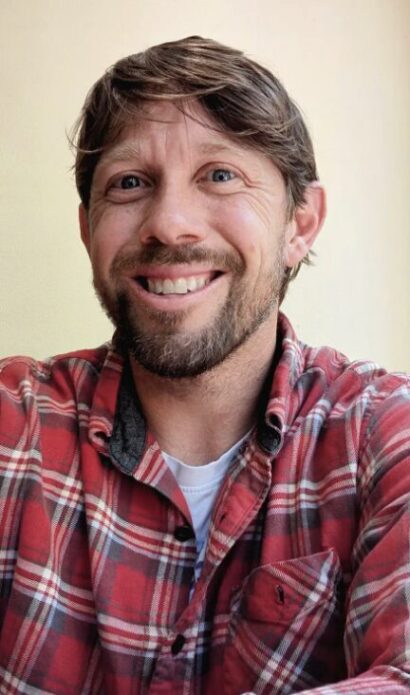
Joseph Spring lives, writes, and sings in the Pacific Northwest. When not searching for a publisher for his novel, he is in, on, or near water.